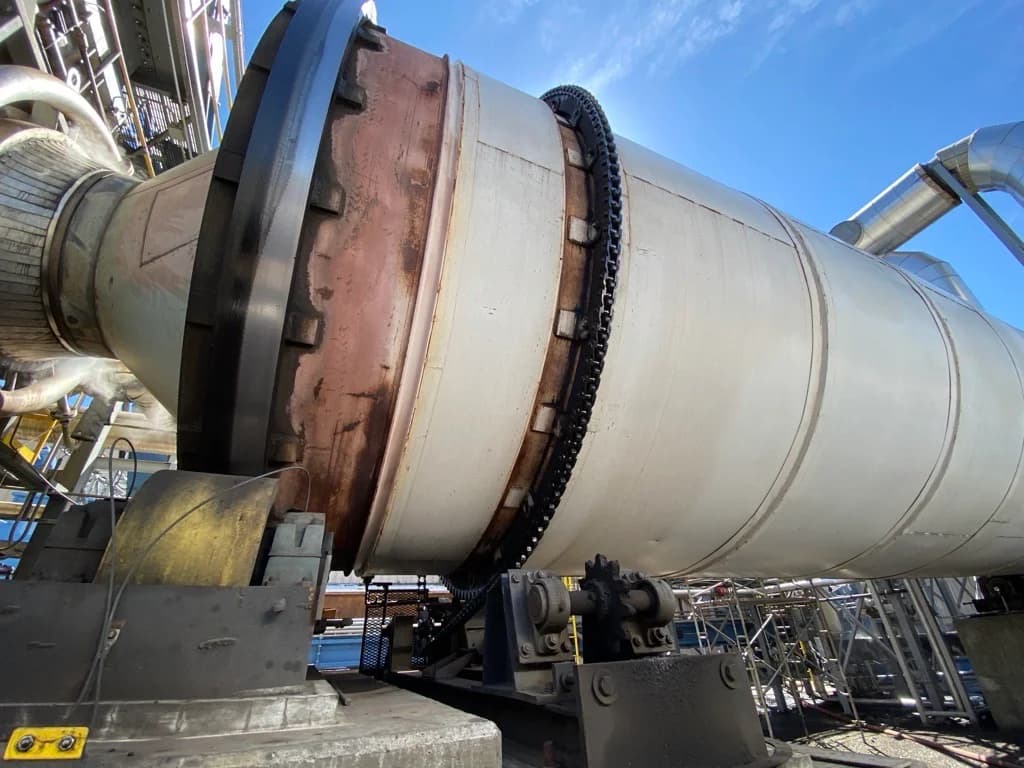
Biochar Facility Debottlenecking & Capacity Expansion
A comprehensive pyrolysis yield analysis with heat and mass balance to identify process and equipment constraints and engineer a path for tripling biochar production capacity.
Project Details
Client
A Regional Biochar Producer
Project Type
Debottlenecking & Expansion Study
Current Capacity
0.775 TPH
Target Capacity
1.75 - 2.5 TPH
Location
Pacific Northwest, USA
Services Provided
- On-site operational audit and data logging
- Pyrolysis analysis to predict biochar quality and syngas constituents
- Development of Heat and Mass Balances (H&MB) for baseline and future states
- Hydraulic analysis of exhaust fans and vapor blowers
- Thermal expansion analysis of reactor drum trunnions
- Capital cost estimation (CAPEX) for expansion infrastructure
The Challenge
A biochar production facility producing approximately 0.775 tons per hour (TPH) sought to significantly increase throughput to meet growing market demand. However, the existing system faced stability issues when pushed beyond nominal rates, suggesting that critical equipment - specifically fans and heat exchangers - were operating near their mechanical or thermal limits.
Specific operational concerns included excessive pressure drops across the heat exchangers, capacity limitations in the vapor blower, and mechanical risks regarding reactor drum thermal expansion. The client required a detailed engineering analysis to identify the specific bottlenecks and a verified roadmap to safely scale production to a conservative 1.75 TPH (with expectations upwards of 2.5 TPH) without compromising safety, equipment reliability or safety.
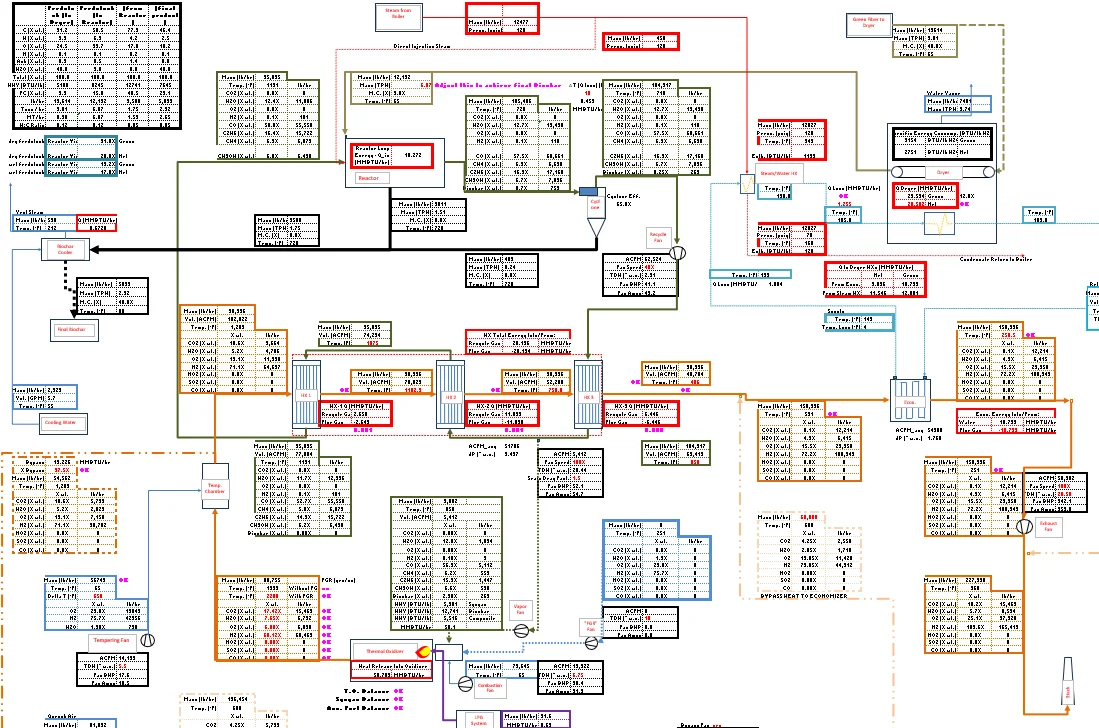
Modeling the Path to Higher Throughput
CPE utilized field measurements and historical operational data to build rigorous pyrolysis and heat & mass balance models, simulating future production scenarios to identify equipment constraints (thermal, hydraulic, and bulk handling).
Field Assessment
System Modeling
Hydraulic Analysis
Expansion Design
Validated Roadmap to Triple Capacity
The study confirmed the feasibility of increasing production to 2.5 TPH through targeted upgrades, providing the client with a clear investment strategy.
2.5 TPH
Max Potential Capacity
Up from 0.775 TPH baseline
$3.0M
Est. Expansion CAPEX
For maximum throughput scenario
1,100°F
New Reactor Rating
Reactor modifications to meet operating temp.
900°F
Vapor Blower Specification
To meet expected operating temp.
Have an engineering question?
Tell us about your project and we will let you know how CPE can help.